Study Abroad Destinations.
Find your ideal university and best course for your dream career
It can be confusing which country to choose for your studies abroad. You will need to learn a lot about each of the possible countries and the educational systems before making a decision.That’s why EdEuro, the leading Europe study visa consultants has set up a useful guide about the top study abroad destinations
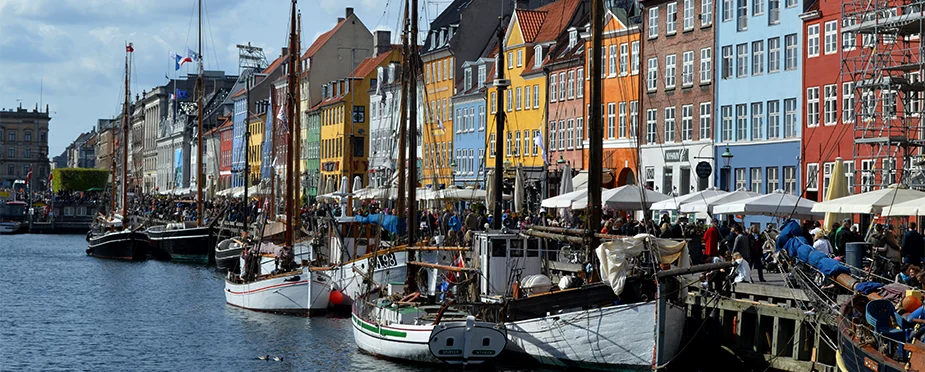
Study In Denmark
Denmark is a rather small Scandinavian country in Northern Europe. The country covers a total of 43,098 square kilometres, comprising the peninsular of Jutland and more than 400 named islands and 7314 kilometres of coastline.
The country is populated by 5.6 million Danes. The population density is 126.4 per square kilometre. A total of 1.2 million people live in the capital of Copenhagen.
Danes are generally very well educated, and living standards are among the highest in the world. Denmark is a parliamentary democracy and a member of the UN, the OECD, the EU, NATO, Schengen, the OSCE, the IMF, the WTO and others.
Over 20 percent of Denmark’s population live in the nation’s capital and largest city, Copenhagen. Denmark has been a member of the European Union since 1973, and it is among the founding members of NATO, the Nordic Council and the United Nations.
As for the country’s economic situation, Denmark has proved quite stable and competitive: Despite an economic slump following the global economic crash in 2008 and 2009, the country has developed a highly-competitive service-based economy. Denmark has a high employment rate, an extremely low inflation rate and very stable social security system. In 2015 and 2016, the inflation rate in Denmark was below 0.5 percent. In 2017, Denmark’s unemployment rate was at only 5.7 percent, making it significantly lower than that of the whole European Union and thus one of the lowest rates among all member states. Denmark has also reported a trade surplus every year over the past decade.
The weather in Denmark is not extreme, despite the northerly position of the country. Denmark is placed in the temperate climate zone, and the mild weather is due to west winds and the seas that surround Denmark almost entirely.
Questions
Happiest Country in the World
Denmark was voted the happiest country in the world in April 2016, via the World Happiness Report. To rank the 156 surveyed countries, a team from the University of British Columbia looked at what the “countries have in common: a large GDP per capita, healthy life expectancy at birth, and a lack of corruption in leadership.
But also essential were three things over which individual citizens have a bit more control: a sense of social support, freedom to make life choices, and a culture of generosity.”
Denmark’s results revealed a high percentage of gender equality and residents who love to bike. This contributes to the wellness of the people and the environment.
English Speaking Country
Denmark is a country where 85% of the population speaks the English language. It, therefore, gets a lot easier for an Indian student to settle in such a place. Because there is not a greater usage of any local language, there are no adaptability issues either. The students take very less time to adjust and thus, there is an enhanced output. Further, they develop a bonding with locals and easily grasp things from their surroundings. Also, the environment in places where there are no language barriers is much calmer and serene.
Denmark is world-leading in tech and sustainable innovation
A small(ish) northern European country with a population of just under six million might not be the first place that comes to mind when you think about the nations leading the world in big tech innovation. However, with its well-educated workforce, significant public and private investment schemes, and a forward-thinking approach to solving the most significant global issues, the Danes are challenging the tech giants in China and Silicon Valley in terms of shaping the future. Denmark is home to pioneers like Per Brinch Hansen, known for his work revolutionary in computer programming, as well Janus Friis, co-creator of Skype, and Google maps founders Jens and Lars Rasmussen.
One of the most exciting areas in today’s Danish tech sector is robotics. The Maersk Mc-Kinney Moller Research Institute, at the University of Southern Denmark, has helped launch hundreds of companies including Universal Robots and OnRobot, two of the major players designing and creating the next generation of smart machines set to revolutionize the manufacturing, healthcare, service, and security industries. This makes Denmark one of the top destinations for engineering, design, and computing students who want to build a career in this rapidly growing field.
Denmark is also leading the way in terms of sustainability, with the help of all of this cutting-edge technology and also brilliant design and innovation. Five years ago, the capital Copenhagen was hailed a “green economy leader” in a London School of Economics (LSE) report, but, not content to rest on its laurels, the city is pushing forward with its new climate plan, CPH 2025, a bold vision to become carbon neutral is just six years. The plan stipulates that projects should secure and improve the quality of life in the city and generate opportunities for innovation, jobs, and green growth.
Reduced Costs
Not everyone can afford the huge expenses involved in studying abroad. Most people give up their dreams of studying abroad thinking about the amount of money involved. The good news is that you don’t have to worry about the financial aspect when it comes to studying in Denmark. It is because the costs associated with studying in this country are modest. The estimated costs of studying in Denmark are 7 to 10 lacs per year. The expenses involved are way too less as compared to other countries.
-
Denmark is reported to be the happiest country in the world.
-
Denmark is considered the “least corrupt” country in the world
-
Denmark borders only one country, Germany.
-
The ice-free part of Greenland is almost 10 times larger than Denmark.
-
In a year, the average temperature changes from 0 °C in January to 16 °C in August.
-
If you decide to buy a boat in Copenhagen and sail to the nearest shore on the other side of the water, you will arrive in Sweden.
-
Interestingly enough, the Danish language has no word for “please”
-
First acknowledged in 1219, the Danish flag remains the oldest state flag in the world still in use by an independent nation.
Higher education in Denmark is taught at universities, university colleges and academies of professional higher education.
Most of the higher education institutions are regulated by the Ministry of Higher Education and Science .
Higher education institutions Higher education is offered by five types of higher education institutions:
-
Business academies (Erhvervsakademi) offering professionally oriented short cycle and first cycle degree programmes.
-
University Colleges (Professionshøjskole) offering professionally oriented first cycle degree programmes.
-
Maritime Education and Training Institutions offering professionally oriented short cycle and first cycle degree programmes.
-
General and specialised research universities (Universitet) offering first, second and third cycle degree programmes in academic disciplines.
-
University level institutions offering first, second and third cycle degree programmes in subject fields such as architecture, design, music, and fine and performing arts.
Ordinary Higher Education degrees
The Academy Profession degree is awarded after 90-150 ECTS and includes a period of work placement of at least 15 ECTS. The programmes are development-based and combine theoretical studies with a practical approach. Programmes are, among others, offered within Marketing Management, Computer Science and Chemical and Biotechnical Science. The Danish title is field of study followed by the abbreviation AK and the English title is AP Graduate in [field of study].
The Professional Bachelor’s degree is awarded after 180-270 ECTS and includes a period of work placement of at least 30 ECTS. The programmes are applied programmes. They are development-based and combine theoretical studies with a practical approach. Examples of professional bachelor’s degree holders are nurses, primary and lower secondary school teachers and certain types of engineers. The Danish title is Professionsbachelor i [field of study] and the English title is Bachelor of [field of study].
The Bachelor’s degree from a university is awarded after 180 ECTS. The programmes are research-based and are offered in all scientific fields. The Danish title is Bachelor (BA) i [field of study] or Bachelor (BSc) i [field of study] and the English title is Bachelor of Arts (BA) in [field of study] or Bachelor (BSc) of Science in [field of study].
The Bachelor’s degree (within the arts) is awarded after 180 ECTS. The programmes are based on research and artistic research. Programmes are offered within the fine arts. The Danish title is Bachelor (BA) i [field of study], Bachelor i musik (BMus) [field of study] or Bachelor i billedkunst (BFA) [field of study] and the English title is Bachelor of Arts (BA) in [field of study], Bachelor of Music (BMus) [field of study] or Bachelor of Fine Arts (BFA) in [field of study]. A higher education degree within theatre or filmmaking is awarded after 3-4 years of study (180-240 ECTS).
The Master’s degree is awarded after 120 ECTS. The programmes are research-based and are offered in all scientific fields. The Danish title is abbreviated to Cand.[latin abbreviation of academic area] i [field of study]. The English title is Master of Arts (MA) in [field of study] or Master of Science (MSc) in [field of study].
The Master’s degree (within the arts) is awarded after 120-180 ECTS. The programmes are based on research and artistic research. The Danish title is abbreviated to Cand.[latin abbreviation of academic area] [field of study]. The English title is Master of Arts (MA) in [field of study], Master of Music (MMus) [field of study] or Master of Fine Arts (MFA) in [field of study]. Music Academies offer a specialist degree of 2 to 4 years following the master’s degree. The PhD degree is awarded after 180 ECTS. PhD programmes are offered by the universities and some university level institutions offering degrees in the artistic and cultural field
-
Computer Science
-
Multimedia design
-
Business
-
Tourism
-
Marketing Management
-
Sports Management
Non-Danish citizens who do not have a Danish entrance examination are eligible for admission if they have qualifications recognised as being comparable to Danish entrance qualifications. The assessment serves only as a guideline since the individual institution in Denmark is responsible for its own admissions. The institution in Denmark will require certified copies of your educational qualifications. That is, you must provide copies with original stamps and signatures, or have two people who are not related to you sign the back of the copy with their name, address and birth date. Some institutions require that they receive the documents directly from the issuing institution. This can often take several months, so be sure to arrange in time.
English language requirements
All higher education programmes in Denmark require a high standard of English. Applicants to English-taught undergraduate and postgraduate programmes must, as a minimum, prove English proficiency comparable to ‘English B’ in the Danish upper secondary school (gymnasium). Some programmes require ‘English A’, which is one level higher than ‘English B’.
To prove a satisfactory proficiency in English, the language tests TOEFL, IELTS and Cambridge ESOL examinations (CAE) are often used. The score equivalents are determined by the individual institution, so to be certain check out their language requirements. Based upon a rough average of previous requirements, here is an estimate of the ranges you can expect:
-
IELTS: min overall 6.5 with no band less than 6.5
-
TOEFL (paper based): min 550
-
proof of proficiency in Danish, if the programme is taught in Danish (see above)
-
A copy of passport or ID card
-
A passport picture
-
A personal statement in English (should contain around 500-800 words answering questions such as: Why and what would you like to study at the university? What are your plans after graduation?)
-
Copies of obtained secondary school diplomas, certificates and/or grade lists (uploaded diplomas and/or grade lists which are not in English need to be accompanied by an official English translation)
-
Transcript of records
-
Proof of English language proficiency
Some universities may require additional documents, such as:
-
CV or resume (including two referees)
-
Motivation letter
-
Sample of academic written work
Tuition Fee
For non-EU/EEA citizens, tuition costs range between 6,000 – 16,000 EUR/academic year. Some specialised programmes might cost more, that’s why we recommend that you check the university page to see what tuition applies to you.
Cost of Living
As a rough estimate, international students need between 800 – 1,200 EUR/month to live in Denmark. These costs can go up or down based on your habits: how much you spend on shopping and going out, how much you travel, and so on. You should also expect to pay more if you decide to study in Denmark’s capital, Copenhagen. Accommodation represents around one third of your monthly living costs in Denmark. You should expect to pay between 400 – 670 EUR in most cities and around 800 – 900 EUR in Copenhagen.Average food expenses in Denmark will amount to 200 – 270 EUR/month, depending on your spending habits.In Denmark, almost 50% of students use bikes to get to their university, while 30% use public transport. A monthly public transport pass for the bus, metro or train amounts to 40 – 50 EUR/month.
Non-EU/EEA/Swiss citizens may work in Denmark for up to 20 hours a week and full-time during June, July and August. However, this requires a work permit sticker in your passport. If you did not apply for a work permit when applying for a residence permit to study in Denmark, you can apply for one at the Danish Immigration Service.If you are under 18 years of age, you are only eligible for a work permit if you have a written offer or contract for a specific position. The employer must also confirm to the Danish Immigration Service that he or she upholds workplace environment legislation.
Students who want to study for more than 3 months in Denmark should apply for a long term visa which is called Residence Permit.
Who can apply for a residence permit?
-
If you have been admitted to a higher educational programme in Denmark
-
You can either complete a full educational programme or do part of your education as a guest or exchange student.
-
You can also be granted a residence permit to complete a preparatory course for a higher educational programme.
What are the conditions?
-
You must be admitted to a higher educational programme
It is a requirement that you have been admitted to a higher educational programme at a publicly accredited educational institution in Denmark.
-
Your place of education and the educational programme must be approved.
-
The educational institution must be publically accredited.
-
The educational programme must be approved by a state authority or by the Danish Evaluation Institute, EVA.
-
The educational programme must be a full-time study.
-
You must be able to support yourself
-
You must have sufficient funds to be able to support yourself during your stay in Denmark.
-
If you are to pay a tuition fee for studying in the educational programme and if you have already paid tuition for the first semester, this is seen as documentation that you have sufficient funds. In this case you do not need to provide documentation.
You must prepare following documents
-
Student visa application form ST-1 (Comes from Denmark after payment of tuition fee).
-
2 sets of colored Photocopies of all your educational documents.
-
2 sets of Scan copy of all pages of passport (passport should be valid for at least 18 months from the date of visa application). (black & white is acceptable),including cover of passport)
-
Admission letter from University.
-
Payment acknowledgement receipt from the college.
-
IELTS certificate (Mandatory for Denmark) in Most of the colleges.
-
6 passport size photographs with white background.
-
Educational Transcripts
-
SOP & CV
-
Visa fee of Rs. 15100 + VFS service charge 1500 INR – should be in cash.
-
Travel insurance
-
Proof regarding accommodation arrangement during your studies
Non-EU/EEA/Swiss citizens will need a residence permit to work in Denmark. Upon graduation from a Danish higher education institution, your residence permit will remain valid for an additional six months, allowing you to seek employment in Denmark. Provided your visa hasn’t already been extended for an extra six months you can apply for such an extension to your permit.